Articles en français
Un recueil d'articles en français sur la recherche planétaire et l'exploration spatiale.
Un recueil d'articles en français sur la recherche planétaire et l'exploration spatiale.
Un recueil d'articles en français sur la recherche planétaire et l'exploration spatiale.
Un recueil d'articles en français sur la recherche planétaire et l'exploration spatiale.

Introduction: In this article, I’ll delve into the captivating realm of long-term space habitation, focusing on the species that have undergone extensive study in this unique context. Human beings have long been at the forefront of space exploration, enduring prolonged missions aboard space stations like the International Space Station (ISS). Through decades of research,…
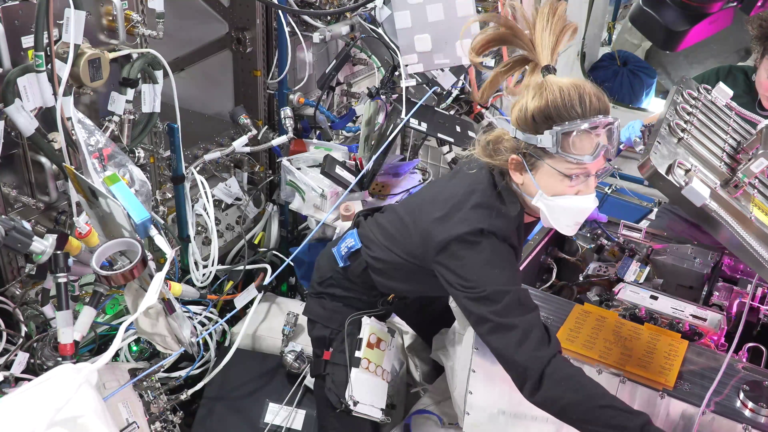
This video was published by ESA astronaut Sophie Adenot on social media with the following caption: Day 133, orbit 2063 — In this timelapse, I’m retrieving the fourth sample printed with the first 3D metal printer ever sent to space, ESA’s Metal 3D printer… and getting everything ready for the next printing session!…
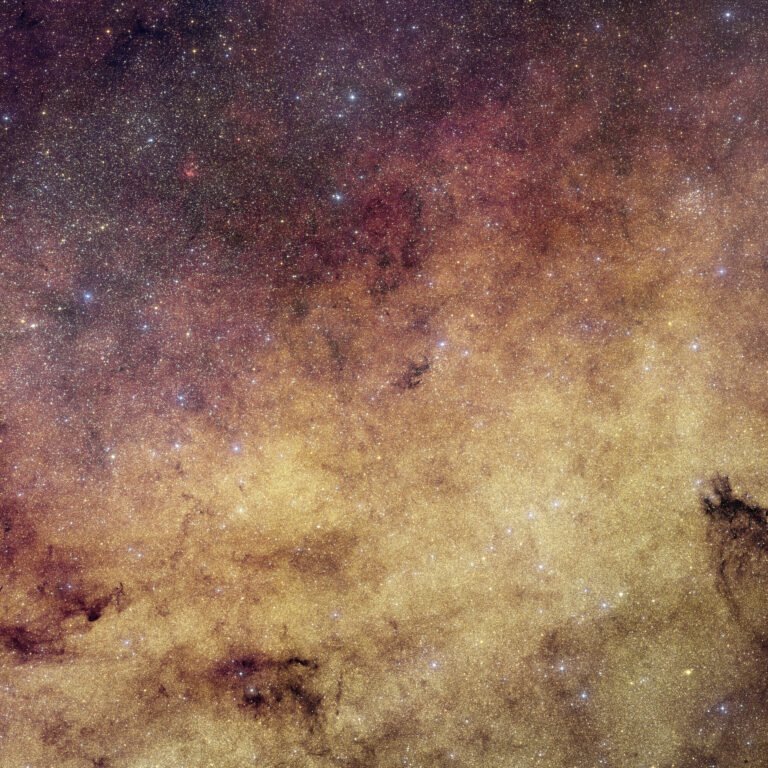
This image by ESA’s (European Space Agency) Euclid (with color added using ground-based images) provides an earlier snapshot of a region of our galaxy that NASA’s Nancy Grace Roman Space Telescope will repeatedly observe during the upcoming years. Image Credit: ESA/Euclid/Euclid Consortium/NASA, CFHT, image processing by J.-C. Cuillandre and E. Bertin (CEA Paris-Saclay) Read More…
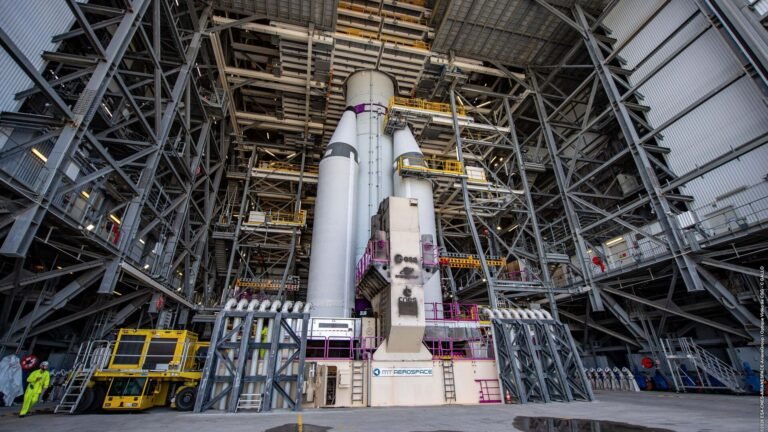
On the 17th of June Ariane 6 flight VA269 soared to orbit from Europe’s Spaceport in French Guiana. The latest generation of Europe’s largest and most powerful rocket launched 36 satellites for Amazon’s Leo constellation. The debut of the four new boosters based on the P160C solid-propellant rocket motor allowed 36 satellites to be launched,…
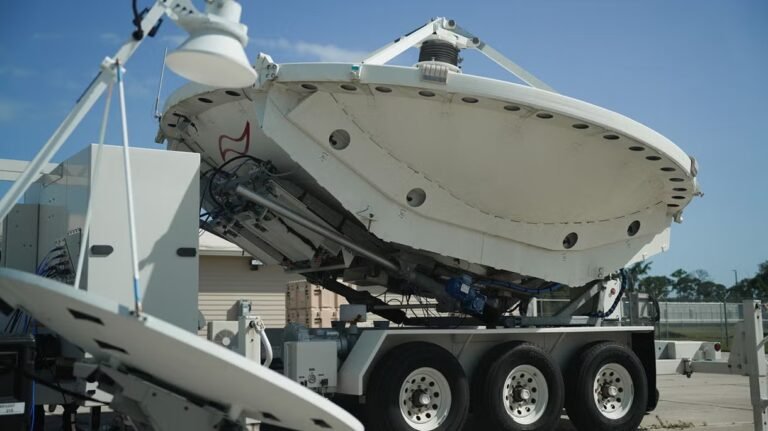
WASHINGTON — The U.S. Space Force has placed into operational service a new mobile satellite-jamming system capable of temporarily disrupting an adversary’s communications. The electronic warfare system, known as Meadowlands and built by L3Harris Technologies, uses radio-frequency signals to interfere with an adversary satellite’s ability to transmit information. Unlike anti-satellite weapons designed to physically destroy…
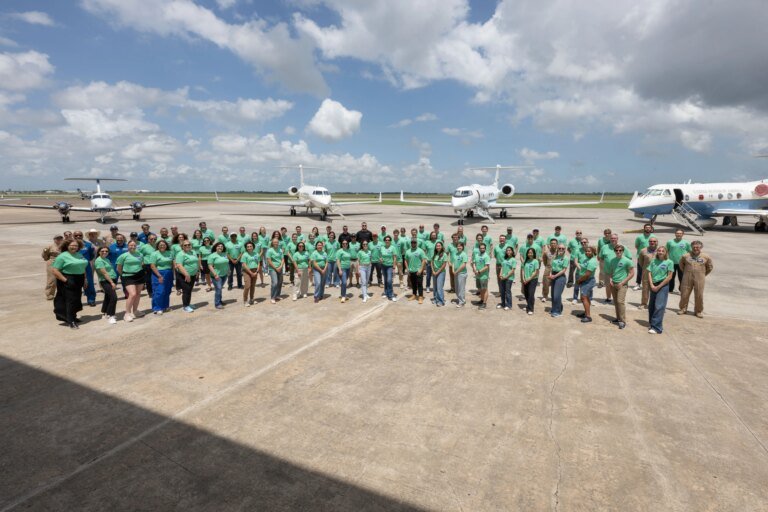
From June 3 to 13, aircraft at Ellington Field in Houston gave students a firsthand look at how scientists study Earth from the air. Through NASA’s Student Airborne Research Program, or SARP, students learned how airborne field campaigns collect data used in atmospheric science, ecology, air quality research, and climate modeling. This year’s activity took place…